Hi, I'm Greshma Shaji
A
Software Engineer passionate about AI, Machine Learning, DevOps and building scalable systems.
About
I am a passionate Software Engineer with a diverse range of experiences spanning Automation, DevOps, Data Science, and Machine Learning Development. With experience across corporate, research, and startup environments, I specialize in building scalable AI-driven solutions, optimizing workflows, and driving automation to enhance enterprise systems.
Industries & Experience
- Industries: Automotive, Cloud Computing, AI & Machine Learning, DevOps, Research & Development
- Corporate Experience: IBM, BMW Group, SAP
- Research Contributions: Fraunhofer IIS Institute
- Startup Experience: Retorio
- Publications: Published IEEE-certified research on medical AI (COVID-19 detection via X-ray)
I am always eager to explore new technologies and work on challenging problems that push the boundaries of innovation.
Let’s connect! Feel free to explore my projects or reach out for collaborations.
Experience

- Contributed to the development of the QUARK framework , an open source framework for BMW-specific quantum and classical hardware applications.
- Collaborated with cross-functional teams to model, evaluate, and optimize quantum applications for automotive use.
- Resolved dependency issues, improved code quality, and ensured adherence to PEP8 standards.
- Enhanced architectural models connecting quantum computing theory to real-world automotive applications.
- Led efforts to improve unit testing for better robustness and coverage.
- Contributed to AI Agent Workflow project, focusing on planning agent optimization and prompt refinement for multi-agent systems.
- Managed technical documentation and Jira tasks to streamline project workflow and tracking.
- Tools: Python, Bash/Shell Scripting, Qiskit, PennyLane, Docker, GitHub Actions, PEP8 & AutoPEP8, Unittest, JIRA, Confluence

- Error Handling Improvement: Developed an HTML report generator using Go in Azure pipelines, reducing pipeline error identification time by 30% and enhancing operational efficiency.
- API Integration: Integrated a REST API to facilitate error communication with an LLM, increasing error resolution speed by 25%.
- Data Manipulation: Utilized Excel for data tasks, improving data analysis accuracy by 20%.
- Resource Optimization: Designed and implemented a Go-based resource cleanup module, reducing manual workload by 50% and preventing resource wastage.
- Voice-enabled Chatbot Development: Created a voice-enabled chatbot using pyttsx3, SentenceTransformer, and SAP BTP's GPT-4-32k, reducing pipeline query resolution time by 40%.
- Backend Development: Developed a Flask backend to handle voice queries, streamlining chatbot interface operations.
- Tools: Python, Go, Azure DevOps, Docker, Excel, REST API, Flask, SAP BTP, SentenceTransformer, pyttsx3, JIRA, Grafana,

- Recommendation System Development: Contributed to advanced recommendation system, improving patient treatment planning precision by 20%.
- Data Analysis Enhancement: Enhanced data analysis capabilities using Python, increasing analytical efficiency by 30%.
- Prediction Accuracy: Improved prediction accuracy and reliability by implementing and fine-tuning a Random Forest Classifier, achieving a 15% boost in model performance.
- Model Transparency: Integrated mlflow for model transparency and reproducibility, ensuring consistent workflow documentation.
- Team Collaboration: Fostered teamwork by establishing a well-maintained GitLab code repository, improving collaboration and code quality by 25%.
- Tools: Python, Random Forest Classifier (Scikit-learn), MLflow, Pandas & NumPy, Matplotlib & Seaborn, Jupyter Notebooks, GitLab

- Test Automation Framework Development: Designed and developed test automation frameworks using Puppeteer and Jest, reducing test execution time by 40%.
- CI Integration: Integrated automation frameworks with GitLab CI, enhancing testing efficiency by 35%.
- Bug Identification: Conducted manual testing to identify bugs and issues, improving platform stability by 25%.
- Comprehensive Test Coverage: Scripted test cases in JavaScript, ensuring 95% test coverage.
- Performance Reporting: Reported daily performance metrics to the development team lead, ensuring timely delivery of high-quality scripts.
- Documentation: Documented test procedures and results, facilitating future reference and ensuring reproducibility.
- Tools: JavaScript, Puppeteer, Jest, GitLab, Manual Testing

- Automation Testing and DevOps: Conducted UI automation testing and DevOps using Puppeteer, JavaScript, and Ansible, reducing manual testing efforts by 60%.
- Automated Test Scripts: Developed automated test scripts using Puppeteer, JavaScript, Jest, Allure, and Python, increasing test coverage by 50%.
- Framework Development: Built a new automation framework for IBM Cloud Pak for Data, improving test efficiency by 45%.
- Test Result Analysis: Analyzed test results daily, improving defect detection rate by 30%.
- Mentoring and Code Reviews: Mentored team members and participated in code reviews, enhancing code quality by 25%.
- Use Case and Specification Development: Developed use cases, user interface specifications, and user requirement documents, ensuring clear and precise project documentation.
- Reporting: Generated reports using Allure framework, improving transparency and communication with stakeholders.
- Agile Participation: Attended daily scrum meetings, actively sharing risks and roadblocks, and ensuring smooth project progress.
- Tools: JavaScript, Python, Bash/Shell Scripting, Puppeteer, Jest, Allure Framework, GitHub, Manual Testing, Ansible, IBM Cloud Pak for Data, Agile Scrum Meetings
Projects
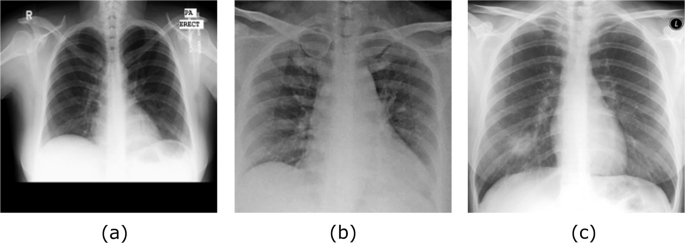
Deep learning model to identify COVID-19 in chest X-rays with 96.54% accuracy
- Objective: Automate COVID-19 diagnosis using chest X-ray scans.
- Approach:
- Compared 4 pre-trained models (DenseNet201, ResNet, VGG16).
- Optimized hyperparameters for highest accuracy.
- Results:
- Achieved 96.54% accuracy with DenseNet201.
- Enabled rapid screening for medical professionals.
- Tools:
TensorFlow/KerasPythonMedical Imaging
- Dataset: Kaggle (10,000+ X-ray images)
- Deployment: Built a Flask-based web application for real-time image classification
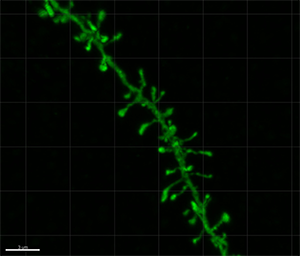
Developed an advanced deep learning pipeline for analyzing 3D dendritic spine morphology from microscopy images.
- Objective: Automate analysis of dendritic spines (critical for learning/memory) using 3D microscopy data.
- Approach:
- Utilized DeepD3 framework with pre-trained neural networks
- Trained on annotated microscopy datasets
- Generated 3D regions-of-interest (ROIs) for spines
B2B platform connecting energy service providers with industrial clients.
- Role: Chief Marketing Officer (CMO) & Backend Developer
- Objective: Create a digital marketplace for Omicron's power voltage optimization services.
- Key Contributions:
- Led requirement gathering from stakeholders
- Conducted user interviews for UX refinement
- Developed backend using Node.js/Express.js
- Designed MongoDB database architecture
Skills
Programming Languages
 Python
 JavaScript
 GO
GO
 MySQL
MySQL
 Shell Scripting
Databases
 PostgreSQL
 MongoDB
AI & Machine Learning
 Pandas
 NumPy
NumPy
 Matplotlib
 Keras
Keras
 TensorFlow
 PyTorch
 Scikit-learn
 LLM
LLM
 Agentic AI
 Reinforcement Learning
Tools & Testing
 Jira
Jira
 Postman
 Puppeteer
 Figma
Figma
 Jest
Jest
 Ansible
 Git
Git
 Jenkins
 Prometheus
DevOps & Cloud
 Docker
Jenkins
Docker
Jenkins
 Kubernetes
 Azure DevOps
 Terraform
Cloud Platforms
 AWS
Azure
AWS
Azure
 Google Cloud
Technical Documentation
 Confluence
 LaTeX
LaTeX
Education
Friedrich-Alexander University
Erlangen-Nuremberg, Germany
Degree: Master of Science in Data Science Science
CGPA: 2.5/4.0
2022 – 2025 (Expected)
- Specialization: Machine Learning & Artificial Intelligence
- Relevant Courses: Deep Learning, Reinforcement Learning, Machine Learning in Time Series, Pattern Recognition
Chengannur, Kerala, India
Degree: Honours(Bachelor of Technology in Computer Science and Engineering )
CGPA: 1.6/4
2017 – 2021
- Relevant Courses: Data Structures, Algorithm Design, AI & ML
- Final Year Project: AI-driven Medical Image Analysis
- Extracurriculars: Coding Competitions, AI Research Groups