Hi, I'm Greshma Shaji
Software Engineer working on calibration automation and scalable Python systems for superconducting quantum computers.
About
I am a Software Engineer working on calibration automation and scalable software systems for superconducting quantum computers. I currently work full-time at IQM in Munich, where I contribute to production-grade calibration automation used to operate and scale quantum processing units (QPUs).
My work focuses on developing and maintaining graph-based calibration frameworks, building robust Python systems using multiprocessing, and making architectural decisions to support increasing qubit counts, diverse chip designs, and higher fidelity requirements.
I bring experience across research, industry, and startup environments. Prior to IQM, I worked on large-scale AI systems, MLOps pipelines, and quantum-adjacent software at organizations including Fraunhofer institutes, BMW Group, SAP, IBM, and early-stage startups.
I hold a Master’s degree in Data Science from Friedrich-Alexander-Universität Erlangen–Nürnberg (FAU), with a specialization in Machine Learning and Artificial Intelligence, and I have authored peer-reviewed research in medical AI and quantum computing systems.
Domains & Experience
- Primary Domain: Quantum Computing, Calibration Automation, Systems Software
- Industries: Quantum Technologies, Automotive, Cloud Platforms, AI & Machine Learning
- Industry Experience: IQM Quantum Computers, BMW Group, SAP, IBM
- Research Experience: Fraunhofer ISI, Fraunhofer IIS
- Startup Experience: Retorio
- Publications: IEEE-published research in Medical AI; BenchQC (Quantum Systems Benchmarking)
I am particularly interested in building reliable, scalable systems at the intersection of software engineering and quantum technologies.
Let’s connect! Feel free to explore my projects or reach out for collaborations.
Experience

- Developing and maintaining the Graph-Based Calibration (GBC) framework used for automated calibration of superconducting quantum processors.
- Designing and improving calibration graphs for initial calibration and continuous recalibration of quantum processing units (QPUs).
- Building scalable Python systems using multiprocessing to handle increasing qubit counts and complex calibration workflows.
- Contributing to framework-level architecture decisions to support diverse chip designs and growing system sizes.
- Ensuring robustness, performance, and maintainability of calibration automation software used in production environments.
- Actively researching the integration of AI techniques into quantum calibration and control pipelines.
- Technologies: Python, Multiprocessing, Graph-Based Systems, Quantum Calibration, Superconducting QPUs

- Architected a modular Multi-Agent System (MAS) supporting 10+ heterogeneous agents with plug-and-play scalability.
- Integrated GPT-4, LLaMA 2, Claude, and Mistral, achieving 95%+ task completion accuracy.
- Benchmarked LangChain, AutoGPT, CrewAI, and AgentVerse, achieving 30% performance optimization.
- Implemented pub-sub and direct messaging protocols for agent coordination.
- Built a real-time dashboard for monitoring and controlling agent behavior.
- Co-authored a research paper on scalable LLM-based MAS architectures.
- Tools: Python, LLM APIs, Multi-Agent Systems, GitLab, System Architecture

- Contributed to the development of the QUARK framework , an open source framework for BMW-specific quantum and classical hardware applications.
- Collaborated with cross-functional teams to model, evaluate, and optimize quantum applications for automotive use.
- Resolved dependency issues, improved code quality, and ensured adherence to PEP8 standards.
- Enhanced architectural models connecting quantum computing theory to real-world automotive applications.
- Led efforts to improve unit testing for better robustness and coverage.
- Contributed to AI Agent Workflow project, focusing on planning agent optimization and prompt refinement for multi-agent systems.
- Managed technical documentation and Jira tasks to streamline project workflow and tracking.
- Tools: Python, Bash/Shell Scripting, Qiskit, PennyLane, Docker, GitHub Actions, PEP8 & AutoPEP8, Unittest, JIRA, Confluence

- Error Handling Improvement: Developed an HTML report generator using Go in Azure pipelines, reducing pipeline error identification time by 30% and enhancing operational efficiency.
- API Integration: Integrated a REST API to facilitate error communication with an LLM, increasing error resolution speed by 25%.
- Data Manipulation: Utilized Excel for data tasks, improving data analysis accuracy by 20%.
- Resource Optimization: Designed and implemented a Go-based resource cleanup module, reducing manual workload by 50% and preventing resource wastage.
- Voice-enabled Chatbot Development: Created a voice-enabled chatbot using pyttsx3, SentenceTransformer, and SAP BTP's GPT-4-32k, reducing pipeline query resolution time by 40%.
- Backend Development: Developed a Flask backend to handle voice queries, streamlining chatbot interface operations.
- Tools: Python, Go, Azure DevOps, Docker, Excel, REST API, Flask, SAP BTP, SentenceTransformer, pyttsx3, JIRA, Grafana,

- Recommendation System Development: Contributed to advanced recommendation system, improving patient treatment planning precision by 20%.
- Data Analysis Enhancement: Enhanced data analysis capabilities using Python, increasing analytical efficiency by 30%.
- Prediction Accuracy: Improved prediction accuracy and reliability by implementing and fine-tuning a Random Forest Classifier, achieving a 15% boost in model performance.
- Model Transparency: Integrated mlflow for model transparency and reproducibility, ensuring consistent workflow documentation.
- Team Collaboration: Fostered teamwork by establishing a well-maintained GitLab code repository, improving collaboration and code quality by 25%.
- Tools: Python, Random Forest Classifier (Scikit-learn), MLflow, Pandas & NumPy, Matplotlib & Seaborn, Jupyter Notebooks, GitLab

- Test Automation Framework Development: Designed and developed test automation frameworks using Puppeteer and Jest, reducing test execution time by 40%.
- CI Integration: Integrated automation frameworks with GitLab CI, enhancing testing efficiency by 35%.
- Bug Identification: Conducted manual testing to identify bugs and issues, improving platform stability by 25%.
- Comprehensive Test Coverage: Scripted test cases in JavaScript, ensuring 95% test coverage.
- Performance Reporting: Reported daily performance metrics to the development team lead, ensuring timely delivery of high-quality scripts.
- Documentation: Documented test procedures and results, facilitating future reference and ensuring reproducibility.
- Tools: JavaScript, Puppeteer, Jest, GitLab, Manual Testing

- Automation Testing and DevOps: Conducted UI automation testing and DevOps using Puppeteer, JavaScript, and Ansible, reducing manual testing efforts by 60%.
- Automated Test Scripts: Developed automated test scripts using Puppeteer, JavaScript, Jest, Allure, and Python, increasing test coverage by 50%.
- Framework Development: Built a new automation framework for IBM Cloud Pak for Data, improving test efficiency by 45%.
- Test Result Analysis: Analyzed test results daily, improving defect detection rate by 30%.
- Mentoring and Code Reviews: Mentored team members and participated in code reviews, enhancing code quality by 25%.
- Use Case and Specification Development: Developed use cases, user interface specifications, and user requirement documents, ensuring clear and precise project documentation.
- Reporting: Generated reports using Allure framework, improving transparency and communication with stakeholders.
- Agile Participation: Attended daily scrum meetings, actively sharing risks and roadblocks, and ensuring smooth project progress.
- Tools: JavaScript, Python, Bash/Shell Scripting, Puppeteer, Jest, Allure Framework, GitHub, Manual Testing, Ansible, IBM Cloud Pak for Data, Agile Scrum Meetings
Projects
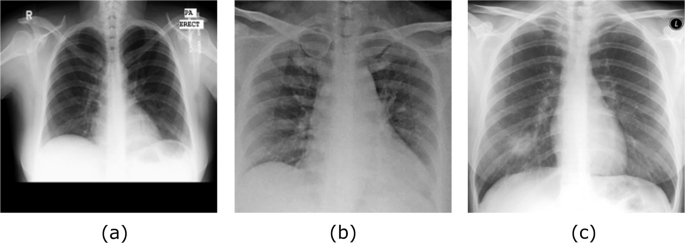
Deep learning model to identify COVID-19 in chest X-rays with 96.54% accuracy
- Objective: Automate COVID-19 diagnosis using chest X-ray scans.
- Approach:
- Compared 4 pre-trained models (DenseNet201, ResNet, VGG16).
- Optimized hyperparameters for highest accuracy.
- Results:
- Achieved 96.54% accuracy with DenseNet201.
- Enabled rapid screening for medical professionals.
- Tools:
TensorFlow/KerasPythonMedical Imaging
- Dataset: Kaggle (10,000+ X-ray images)
- Deployment: Built a Flask-based web application for real-time image classification
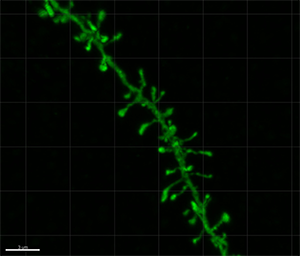
Developed an advanced deep learning pipeline for analyzing 3D dendritic spine morphology from microscopy images.
- Objective: Automate analysis of dendritic spines (critical for learning/memory) using 3D microscopy data.
- Approach:
- Utilized DeepD3 framework with pre-trained neural networks
- Trained on annotated microscopy datasets
- Generated 3D regions-of-interest (ROIs) for spines
B2B platform connecting energy service providers with industrial clients.
- Role: Chief Marketing Officer (CMO) & Backend Developer
- Objective: Create a digital marketplace for Omicron's power voltage optimization services.
- Key Contributions:
- Led requirement gathering from stakeholders
- Conducted user interviews for UX refinement
- Developed backend using Node.js/Express.js
- Designed MongoDB database architecture
Skills
Programming Languages
 Python
 JavaScript
 GO
GO
 Shell Scripting
Databases
 PostgreSQL
 MongoDB
 SQL
SQL
Quantum & Systems Focus
- Calibration Automation • Graph-based frameworks • Scalable Python (multiprocessing)
- Quantum Computing Tooling • QPU workflows • Reliability & performance engineering
AI, LLMs & Machine Learning
 Pandas
 NumPy
NumPy
 Matplotlib
 Keras
Keras
 TensorFlow
 PyTorch
 Scikit-learn
 LLM
LLM
 Agentic AI
 Reinforcement Learning
Tools & Testing
 Jira
Jira
 Postman
 Puppeteer
 Figma
Figma
 Jest
Jest
 Ansible
 Git
Git
 Prometheus
DevOps & Cloud
 Docker
 Jenkins
 Kubernetes
 Azure DevOps
 Terraform
Cloud Platforms
 AWS
Azure
AWS
Azure
 Google Cloud
Technical Documentation
 Confluence
 LaTeX
LaTeX
Education
Friedrich-Alexander University
Erlangen-Nuremberg, Germany
Degree: Master of Science in Data Science Science
Specialization: Machine Learning and Artificial Intelligence
Grade: 2.5/4.0 (German grading scale)
2022 – 2025
Chengannur, Kerala, India
Degree: Bachelor of Technology (Honours) – Computer Science and Engineering
Final Grade: 1.6 (German grade)
2017 – 2021